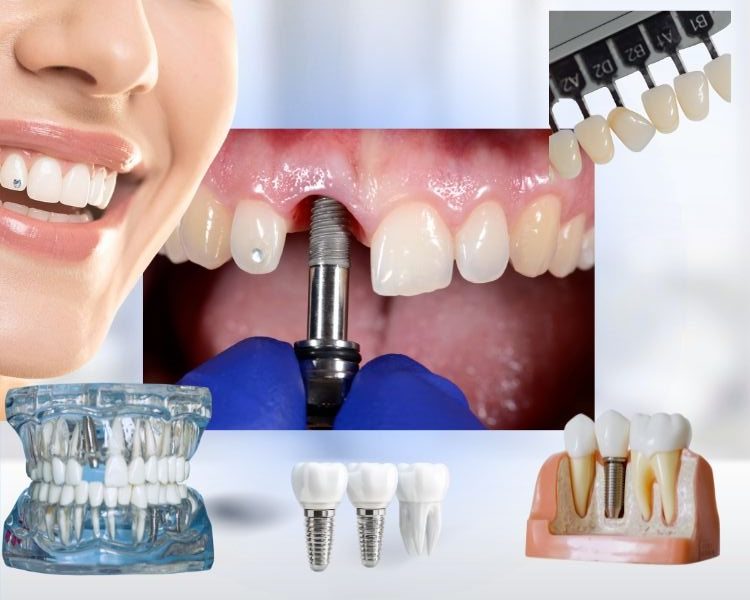
General dentists provide routine preventive cleanings, and they often offer specialized cosmetic and restorative treatments, such as veneers. Many practices expand their scope of services to include procedures that address the appearance and the structural integrity of teeth. By providing both cosmetic enhancements and restorations, primary dentists allow individuals to receive continuous care in a single location. Here’s information on comprehensive services offered by general dentists:
Offering Veneers
Porcelain veneers are custom-made ceramic shells that cover the front surface of natural teeth. Dentists utilize this thin cosmetic service option to address persistent discoloration, surface chipping, or minor spacing variations that do not require full orthodontic intervention. The application process for veneers begins with a detailed consultation and the removal of a microscopic layer of dental enamel. Removing enamel is necessary for most veneer types, as this allows them to fit properly over natural teeth.
Porcelain veneers are carefully applied by a professional, and they provide a durable solution for long-term aesthetic concerns. After preparing the teeth’s surfaces, the dentist takes a precise digital or physical impression to create an accurate mold for the dental laboratory. Once the customized porcelain shell is fabricated and ready, the dentist uses dental cement to bond the veneers. This bonding process permanently affixes veneers to the front of teeth. The primary benefits of porcelain veneers include:
- Their Highly Natural Appearance
- Their Customized Fit
- Their Inherent Resistance To Staining
Offering Clear Aligners
Clear aligners provide a modern alternative to traditional metal braces for addressing mild to moderate orthodontic alignment issues. Many general dentists offer transparent, removable tray options, like Invisalign, to gradually shift teeth into their correct positions. Invisalign treatment involves a series of custom-fabricated, BPA-free plastic aligners that an individual changes every one to two weeks as the teeth move incrementally.
Dentists utilize advanced 3D digital scanning technology to map out the complete anatomical treatment plan from the beginning. Individuals wear their aligners for most of the day and at night, but they are easily removable when eating. Clear aligners can be removed for eating, drinking hot beverages, and daily oral hygiene. This removable system makes daily oral hygiene easier and offers a less visually intrusive way to straighten teeth over time.
Offering Root Canal Therapy
When a tooth’s inner pulp is compromised by decay, repeated dental procedures, or trauma, a root canal may be necessary. Many general dentists can perform root canal therapy. This restorative procedure aims to salvage the natural tooth structure to reduce the potential need for extraction. Here are some treatment steps to expect:
- During the beginning of a root canal treatment, a dentist administers local anesthesia.
- They access the interior chamber of the tooth through a small hole, removing the affected nerve and soft pulp tissue.
- The dentist removes the compromised interior tissue, and they seal the empty root canals to prevent further bacterial issues.
- The provider cleans, shapes, and disinfects the internal pathways of the tooth, and they fill the vacant space with gutta-percha. Gutta-percha is a biocompatible rubber-like material.
- The entry hole is sealed.
The treated tooth will need a custom dental crown following the root canal to fully restore structure and function, sometimes at another visit.
Benefit From a General Dentist
Accessing a range of cosmetic and restorative services through a general dentist offers convenience and continuity of care. They can access complete dental history, radiographs, and treatment records, which allows them to fully understand your treatment needs. From yearly exams to cosmetic enhancements, a general dentist can manage many of your oral health needs. Contact a general practice dentist to learn more about their services.
About the author : Richard