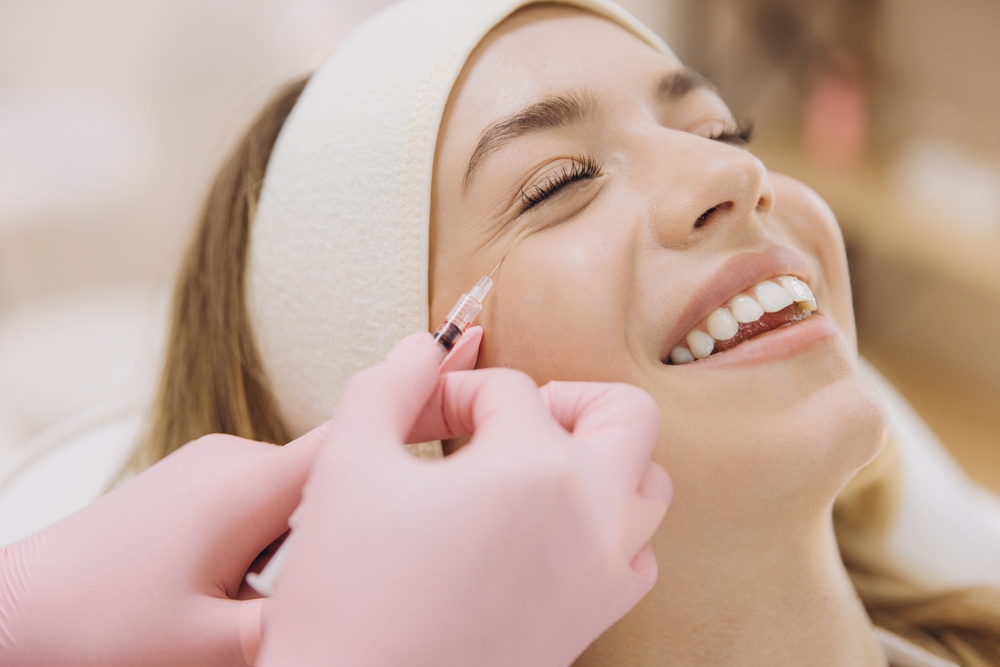
Botox is a common cosmetic treatment that uses specialized neuromodulators. Neuromodulators are purified proteins that temporarily alter nerve function in localized areas. When a specialist injects these substances into targeted facial muscles, they block the release of acetylcholine, a chemical messenger that normally signals the muscle to contract. Without this signal, muscle activity decreases significantly. As a result, the overlying skin remains relaxed and smooth, minimizing the appearance of dynamic wrinkles caused by facial expressions. Here’s more information on Botox treatments and what they can address:
Upper Face
Botox smooths fine lines and wrinkles, but providers also use neuromodulators to adjust other facial areas, such as the eyebrows. The resting position of the eyebrows can be adjusted to achieve a more lifted expression. Muscles in the upper face function in opposing pairs, so the muscles must be addressed precisely. By strategically relaxing the depressor muscles that pull the brow downward, the upward-pulling muscles face less resistance. This shift in muscle dynamics creates a subtle, temporary lift in the brow position without the need for surgical intervention.
The upper third of the face develops noticeable wrinkles due to constant, repetitive muscle movements from expressions like squinting or raising the eyebrows. Frown lines often appear vertically between the eyebrows, but targeted injections can soften their appearance. Practitioners also apply neuromodulators like Botox across the broad frontalis muscle of the forehead to address horizontal expression lines. Treating the muscle at the outer corners of the eyes helps smooth the radial lines commonly known as crow’s feet.
Middle Face
The masseter muscles sit at the back of the jaw and serve as the primary muscles for chewing. Some individuals develop enlarged masseter muscles due to genetics, teeth grinding, or frequent jaw clenching. Injecting Botox into this specific area relaxes the targeted muscle tissue, gradually reducing its mass and size over several weeks. This targeted volume reduction narrows the lower jawline and provides a slimmer, more refined facial profile without impacting the ability to chew food normally.
Lower Face
In the lower face, neuromodulators can alter the mechanical movement of the mouth and lips to achieve different aesthetic goals. A treatment known as a “lip flip” involves precise injections along the upper lip border. This relaxes the orbicularis oris muscle, allowing the top lip to roll slightly outward and create the illusion of a fuller lip. Another lip option involves injecting the muscles that elevate the upper lip to prevent it from rising excessively during a smile, which reduces the visible exposure of the upper gums. Here are two other popular lower face areas to target with Botox:
- Chin Dimpling: An overactive mentalis muscle frequently causes the skin on the chin to pucker or dimple. Relaxing the mentalis muscle with Botox smooths the chin’s surface and creates a more even, uninterrupted contour in the lower face.
- Neck Bands: The platysma muscle spans the length of the neck and can form prominent vertical bands as it thickens or contracts tightly. Neuromodulators applied directly into these prominent bands relax the tension within the muscle fibers. This specific application softens the rigid appearance of the vertical lines for a more unified contour across the front of the neck and jawline.
Visit a Botox Specialist
A qualified aesthetics provider understands complex facial anatomy, so they can create a tailored treatment plan for your specific needs. During a consultation, a specialist assesses your individual muscle movement patterns and discusses the expected outcomes of different injection sites. If you’re interested in cosmetic injections to address facial lines or structural concerns, schedule an appointment with a board-certified professional today. A specialist can help you determine the most appropriate neuromodulator approach for your anatomy and skin condition.
About the author : Richard